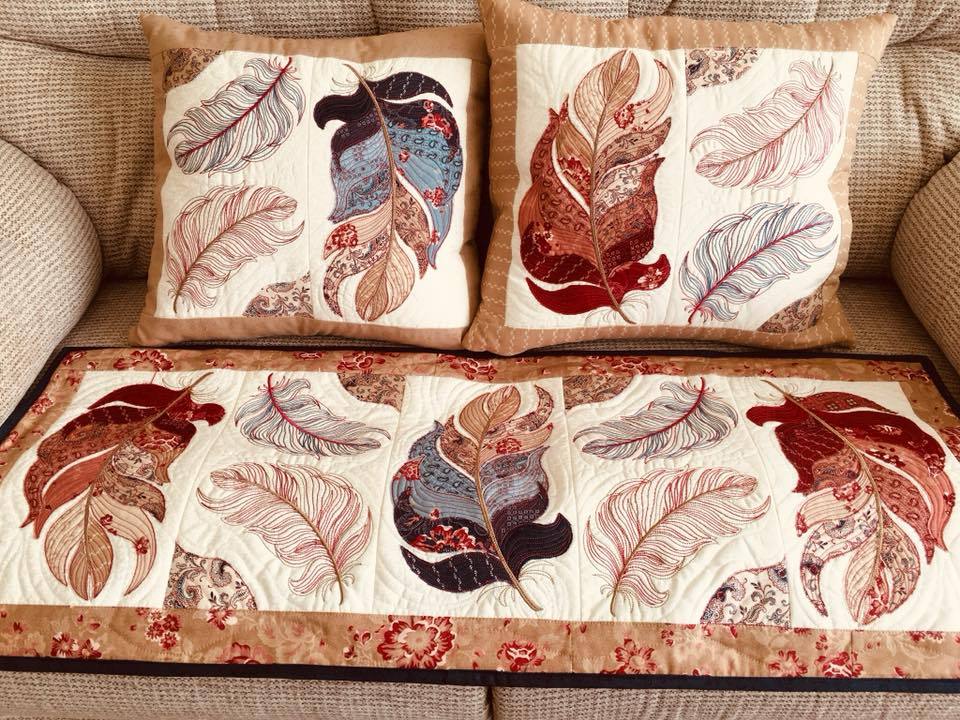
In this blog, Martyn shows you how to make back binding with mitred corners. He also discusses this method and another way to add borders in the video above.
Back Binding Method
The backing is the layer visible when we turn over a quilt, placemat or mug rug to have a look at its reverse side. In this example, we use the backing as the border with mitred corners - also known as back binding.

It's easy to make your own backing, and the backing layer can be created from either regular quilting cotton or wide panels of fabric made especially for the task.
Martyn has made his own for our Feather Placemat as shown in this blog, and using the Sweet Pea Flower Quilting in the video above.
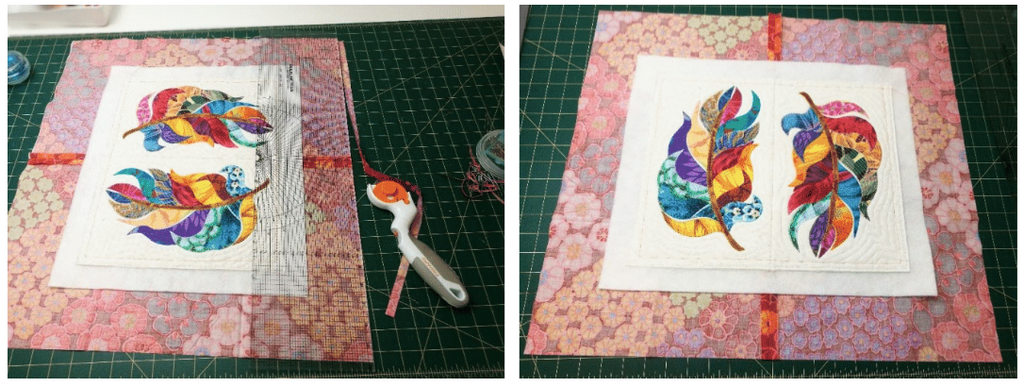
A backing and batting are cut slightly larger than the panels, in our case our Feather Placemat panels, to allow for the distortions and "shrinkage" that take place during the quilting process and to give a bit of extra leeway for squaring up the entire quilt sandwich when project is complete.
It's best to have at least 7.5cm (3 to 4 inches) extra of backing and batting extending beyond all sides of the panels.
This will ensure your backing should be at least 14cm to 16cm (6" to 8") wider and taller than your panel, more if you prefer (and even more backing) to fold it and bring it to the front of the panels to create a beautifully matching border.


Our full set of fully photographed instructions for making your own backing, borders, mitered corners are all available in our Raw Edge Feather Placemat.



1 comment
Janet Warren
Thank you for this video. I’m making a table runner, and this is exactly the info I needed. Your instructions are easy to follow.
Leave a comment
All comments are moderated before being published.
This site is protected by hCaptcha and the hCaptcha Privacy Policy and Terms of Service apply.